Polymarket was banned in the U.S. Now Trump Jr.'s fund is putting in another $300 million.

Polymarket was banned from operating in the United States. This week Donald Trump Jr.'s investment fund put another $300 million into it.
The ban is where this starts. At the time of President Trump's election, Polymarket was barred from the U.S. market by the Commodity Futures Trading Commission and under active federal investigation for allowing American users to keep placing bets on its site. That account comes from Representative Jamie Raskin, in a letter dated August 26, 2026.
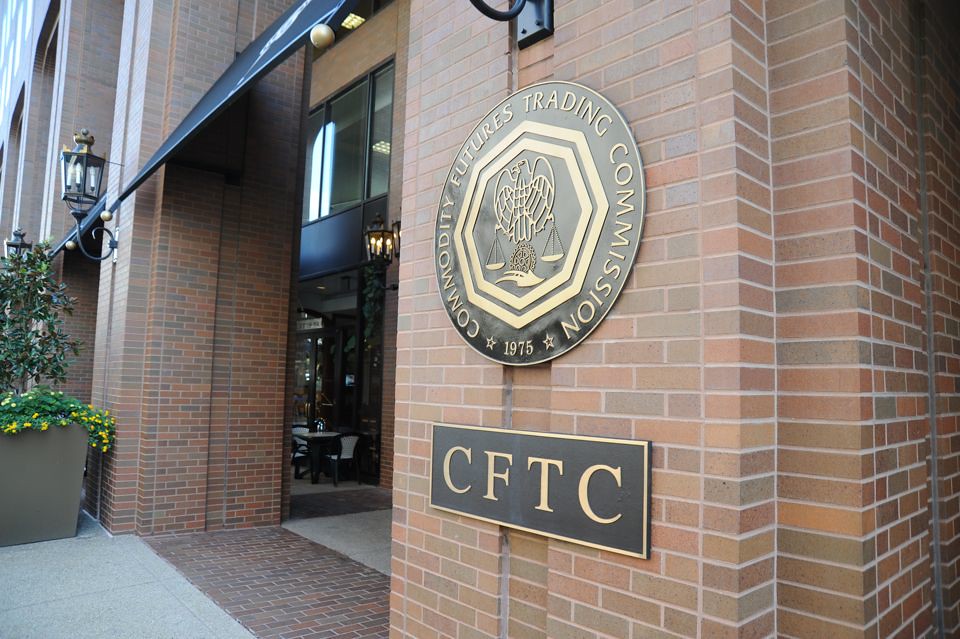
Then the case went away. In July 2025, the Justice Department closed its investigation into Polymarket. A week later, Raskin writes, the CFTC signed off on Polymarket's acquisition of a derivatives exchange for $112 million, and the American market was open to it again.


That purchase is the part worth slowing down for, because it is a shortcut around something slow.
A company that wants to run a derivatives exchange in the United States applies to the CFTC for a designated contract market licence. The statute gives the Commission 180 days to review the application once it is deemed materially complete. In practice, according to a November 2025 advisory from the law firm Katten Muchin Rosenman, full reviews commonly extend well beyond that, often past two years.
Polymarket did not apply. It bought QCEX, a company that already held the licence, for $112 million. In the announcement of that deal, QCEX founder Sergei Dobrovolskii said his team had begun the process of obtaining those licences over four years earlier.
A few short weeks after the CFTC signed off, it was revealed that 1789 Capital had already acquired a sizable stake in Polymarket. Donald Trump Jr. is a partner at the fund.
This week the fund added $300 million more, TechCrunch reported, as part of a funding round of roughly $1 billion.
Raskin's letter went to Trump Jr., to 1789 Capital's Omeed Malik, and to Christopher Buskirk. It describes the fund's investment timing as almost clairvoyant and asks the three of them to account for it. It is a demand for answers rather than a finding, and it offers no evidence that anyone knew what regulators were going to do before they did it.
There is one more thing on the record. In March 2026, Trump Jr. told a retreat of Republican state attorneys general that prediction markets should be regulated federally rather than state by state, CNBC reported, citing the New York Times. The White House separately shared its position with lawmakers in North Carolina.
The rules for prediction markets are still being written.
By the numbers
- $300 million — added by 1789 Capital this week, as part of a funding round of roughly $1 billion[1]
- 180 days — the CFTC's statutory review period for a designated contract market licence; in practice reviews commonly run past two years[2]
- $112 million — the price Polymarket paid for QCEX, a company that already held the CFTC licences its founder said took over four years to obtain[3]
- August 26, 2026 — the date of Rep. Jamie Raskin's letter to Trump Jr., Omeed Malik and Christopher Buskirk describing the fund's investment timing as almost clairvoyant[4]
The reporting
This story is built on reporting by TechCrunch. Read the original →
Sources
- TechCrunch, Polymarket reportedly raises $300 million from Donald Trump Jr.'s investment fund
- Rep. Jamie Raskin, letter to Donald Trump Jr., Omeed Malik and Christopher Buskirk, 26 August 2026
- PR Newswire, Polymarket acquires CFTC-licensed exchange and clearinghouse QCEX for $112 million
- Katten Muchin Rosenman, so you want to apply to become a CFTC-registered designated contract market
- CNBC, Trump Jr. told GOP state attorneys general not to fight prediction markets
Image credits
- Hero: source (CC BY-SA, via Wikimedia Commons) — Gage Skidmore
- In story: source (Photo by the CFTC) — Commodity Futures Trading Commission
- In story: source (Via Wikimedia Commons) — Wikimedia Commons
.jpg)