ICE handed a surveillance app to officers it had not finished vetting.
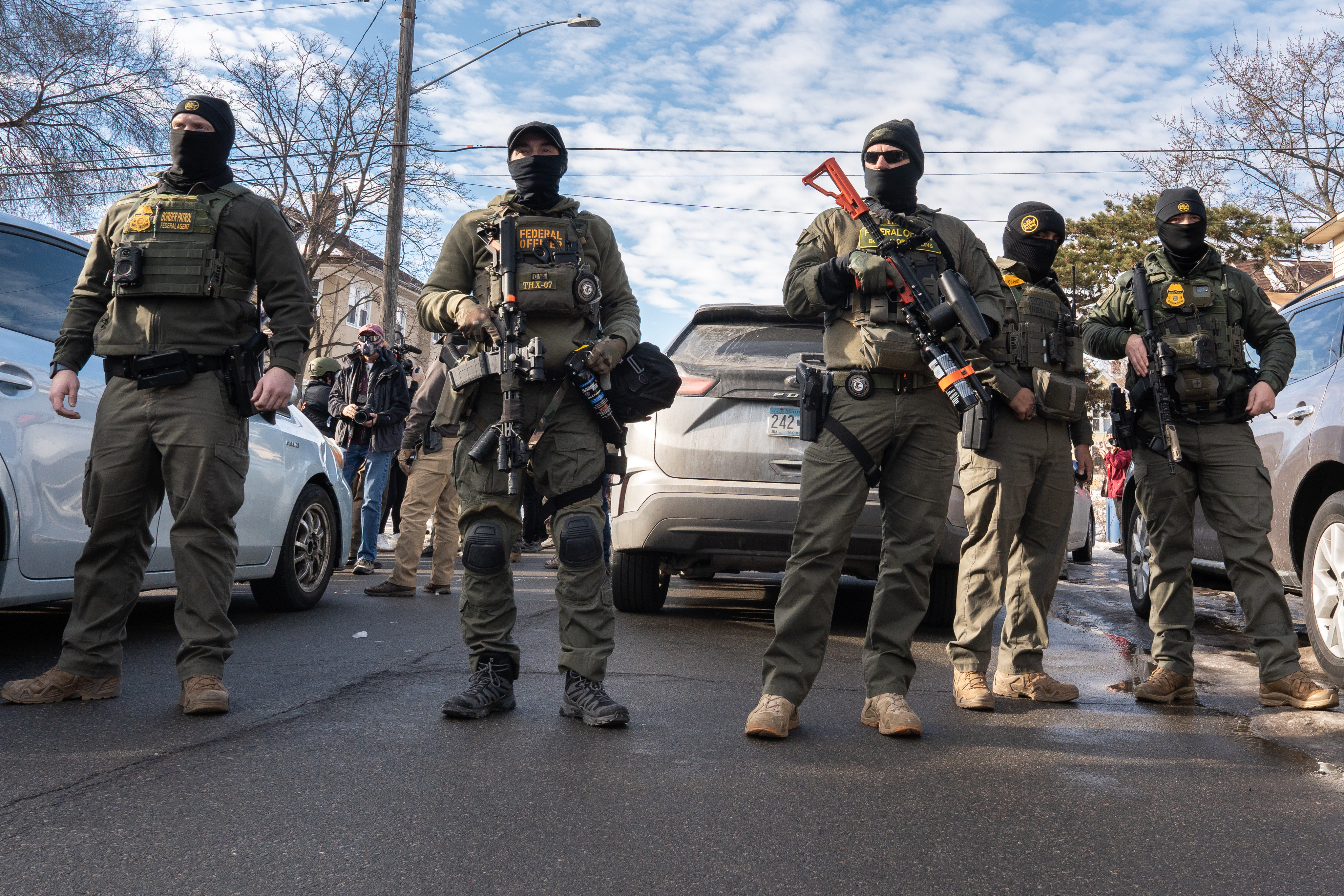
ICE has an app called ELITE. Palantir built it, and during the winter enforcement surge in Minneapolis it was running on deportation officers' phones.
The Intercept reported what it does. ELITE's own user guide identifies twelve distinct data sources: addresses, criminal histories, immigration records, court rulings and other personal information, covering immigrants and United States citizens alike. It issues confidence scores on targets and assembles dossiers and maps of locations. 404 Media, which reported the app's existence in January, described the same core function: it maps potential deportation targets and puts a confidence score on each person's address.

That is the tool. The story is who was holding it.


Before the checks cleared
ICE added more than 12,000 employees through expedited hiring. The Intercept reported that thousands of those new hires were given access to ELITE before their background checks were complete. One officer described it plainly: "It's one of the first applications they give new officers so they can start working. You can access it without full background clearance."
Mary Ellen Callahan, who served as chief privacy officer at the Department of Homeland Security, told The Intercept that this is not how it has worked before. "No one should have been hired by DHS before background reviews were completed. This never happened in previous administrations."
The assessment that does not exist
The E-Government Act of 2002 requires a federal agency to conduct and publish a privacy impact assessment before deploying a system that collects or maintains personally identifiable information. DHS has not published one for ELITE. Its own artificial intelligence catalog links instead to a privacy assessment from 2019, written for ICE's Enforcement Integrated Database, which is one of the twelve sources ELITE draws from rather than ELITE itself.
Callahan also gave The Intercept a number for how much privacy review is happening now. The department's privacy office has published one assessment this year. In her own three and a half years in the job, it published 228.
Clare Garvie of the Policing Project at NYU Law School put the consequence this way: "If ICE can't fulfill this prerequisite, I lack confidence in its ability to use the tool in a lawful, privacy-protective manner."
The operation it ran inside
Operation Metro Surge, the Minneapolis enforcement push where ELITE was deployed to officers' phones, ran from December into February. The Minnesota Reformer's chronology of it reports roughly 4,000 people arrested and 3,000 federal agents brought into the state. It also reports that immigration agents shot three people during the operation, killing two.
Nothing in the reporting connects ELITE to any of those three. What the reporting establishes is narrower and still worth stating plainly: the app was on the phones, the operation was that size, and the privacy review the law asks for first has still not been published.
By the numbers
- 12 — distinct data sources ELITE pulls from, covering immigrants and US citizens, per its own user guide[1]
- 12,000 — employees ICE added through expedited hiring, with thousands given ELITE access before background checks cleared[2]
- 1 versus 228 — privacy impact assessments published by the DHS privacy office this year, against 228 during Mary Ellen Callahan's three and a half years as chief privacy officer[3]
- 4,000 — people arrested during Operation Metro Surge, with 3,000 federal agents deployed and three people shot by agents, two fatally[4]
The reporting
This story is built on reporting by The Intercept. Read the original →
Sources
- The Intercept, ICE gave unvetted hires access to a surveillance app
- 404 Media, ELITE, the Palantir app ICE uses to find neighborhoods to raid
- Minnesota Reformer, A chronology of Operation Metro Surge
Image credits
- Hero: source (Wikimedia Commons, CC BY 4.0) — Chad Davis
- Officers: source (Wikimedia Commons, public domain) — U.S. Immigration and Customs Enforcement
- Protest: source (Wikimedia Commons, CC BY 4.0) — Chad Davis
