Washington Moved To Push Its Borrowing Costs Down. Two Days Later They Were Higher.
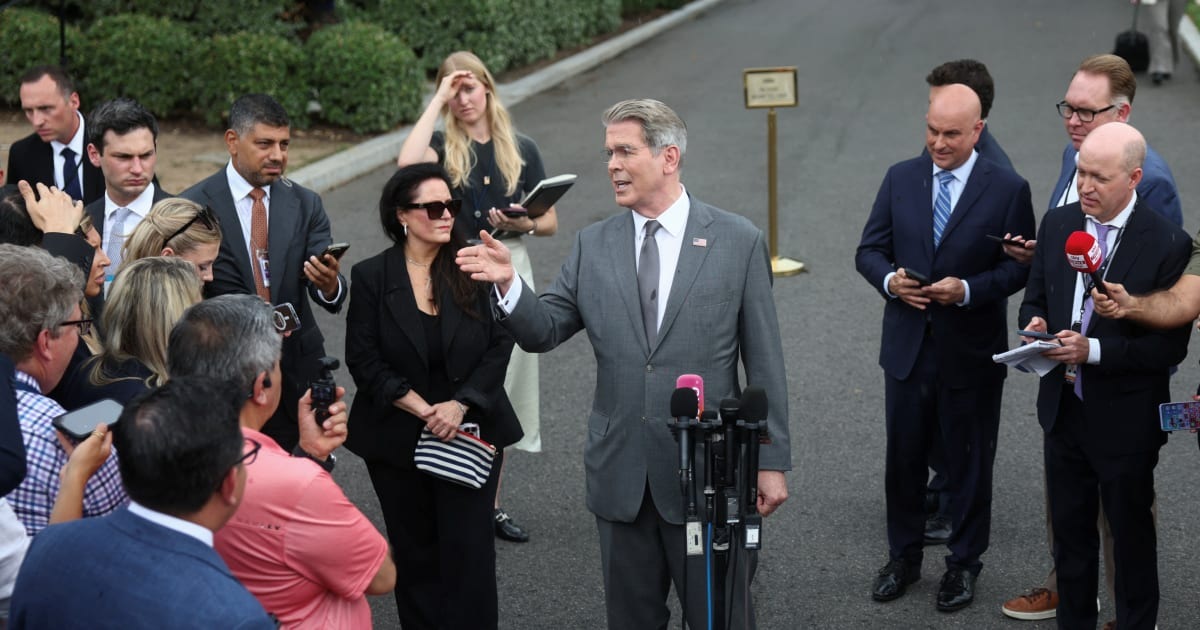
A Treasury bond is the United States government borrowing money. The yield is what it has to promise a lender to take the deal. When the yield goes up it is not the government choosing to pay more, it is lenders refusing to hand over money at the old price, and every extra tick lands on everything the country borrows from that day forward.
On Wednesday 19 August the Treasury tried to push that number down.1 Secretary Scott Bessent doubled the size of the government's long-dated bond buybacks, from $2bn to $4bn per operation, with the enlarged operations running from 9 September to 4 November.2 A buyback is the government becoming a buyer of its own debt: it goes into the market and purchases bonds it already issued, before they mature. More demand lifts the price. A higher price means a lower yield. That is the entire theory.
What actually happened
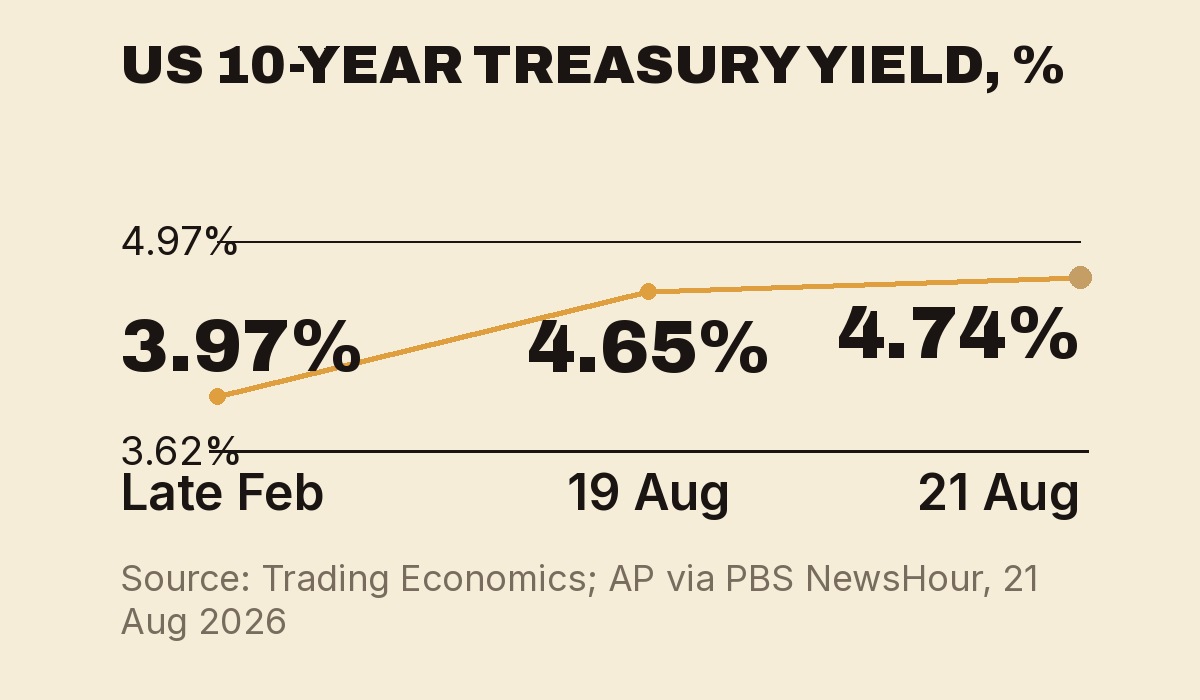
Long-term borrowing costs fell on the announcement. Then they climbed back. By Friday morning the ten-year Treasury yield stood at 4.74 percent, higher than the 4.65 percent it had been at on the day Washington stepped in.3 The relief lasted about two days.
The reason is not complicated, and it is the part worth carrying away. A buyback does not change how much America owes. It does not change how much it has to borrow next year. The Treasury still has to find the cash to do the buying, which it raises by issuing other debt, so the operation swaps the shape of the borrowing without shrinking it. Nothing a lender is actually worried about moved.
“The operation changes almost nothing in terms of the fundamentals,” Krishna Guha of Evercore ISI told the Associated Press.4 The Council on Foreign Relations put the same judgement in its own terms: buybacks are “more signal than substance,” and even doubled they get absorbed into the market's broader supply and demand.5
The climb did not start this week
In late February 2026, before the war with Iran, the ten-year sat at 3.97 percent.3 It has been rising ever since. The thirty-year is the number that matters most, because it locks the price in for three decades, and it is now around 5.25 percent — a level last seen in 2007, the year before the financial crisis.3
What pushes it up is not a mystery either. The CFR analysis points at the term premium — the extra return investors demand for holding debt over long horizons — and says it rises with “doubts about fiscal sustainability.” Fiscal policy that requires more bond issuance, it notes, “needs equally greater demand to hold yields steady.” Foreign investors hold around 30 percent of US Treasury debt, at a moment when trade and tariff policy has frustrated exactly those buyers.5
What it costs
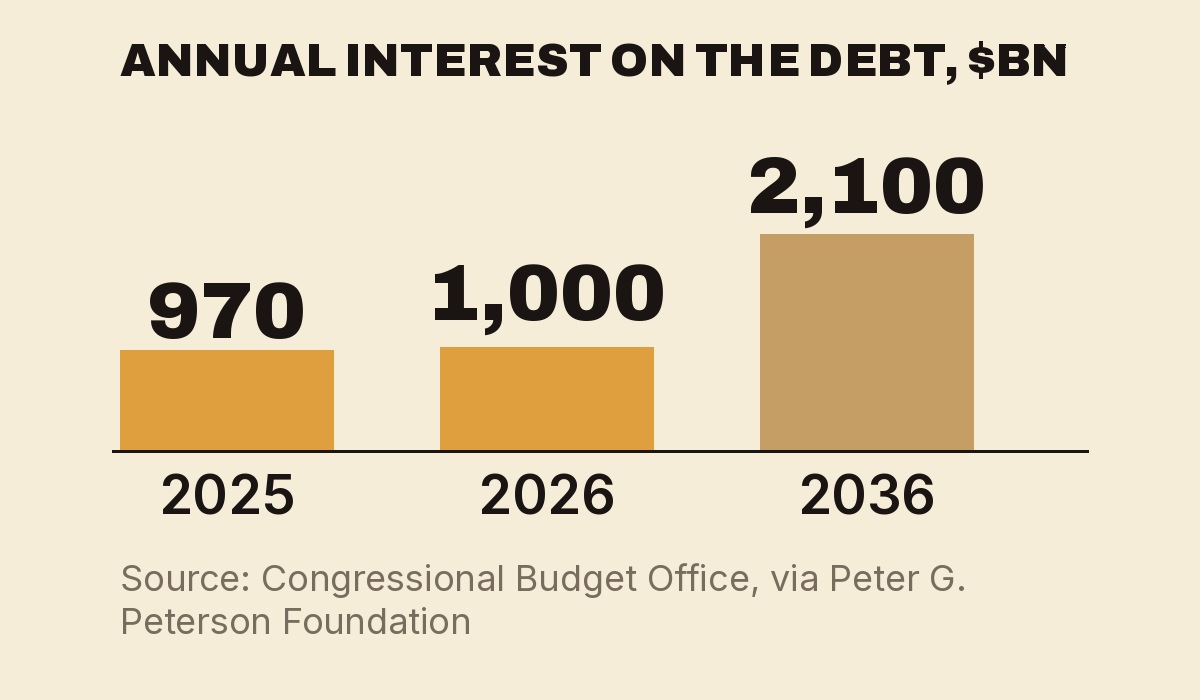
This is not an abstraction on a screen. Interest on the national debt has already cost $931bn in the first ten months of this fiscal year, eleven percent more than the same period last year, and it is now the third largest thing the federal government spends money on.6 The Congressional Budget Office projects annual interest rising from about $1tn now to $2.1tn by 2036.6
That is money spent on nothing but money already borrowed. It buys no road, no carrier, no clinic and no research grant. It is the bill for past borrowing, and the market has just raised the price of taking on any more.
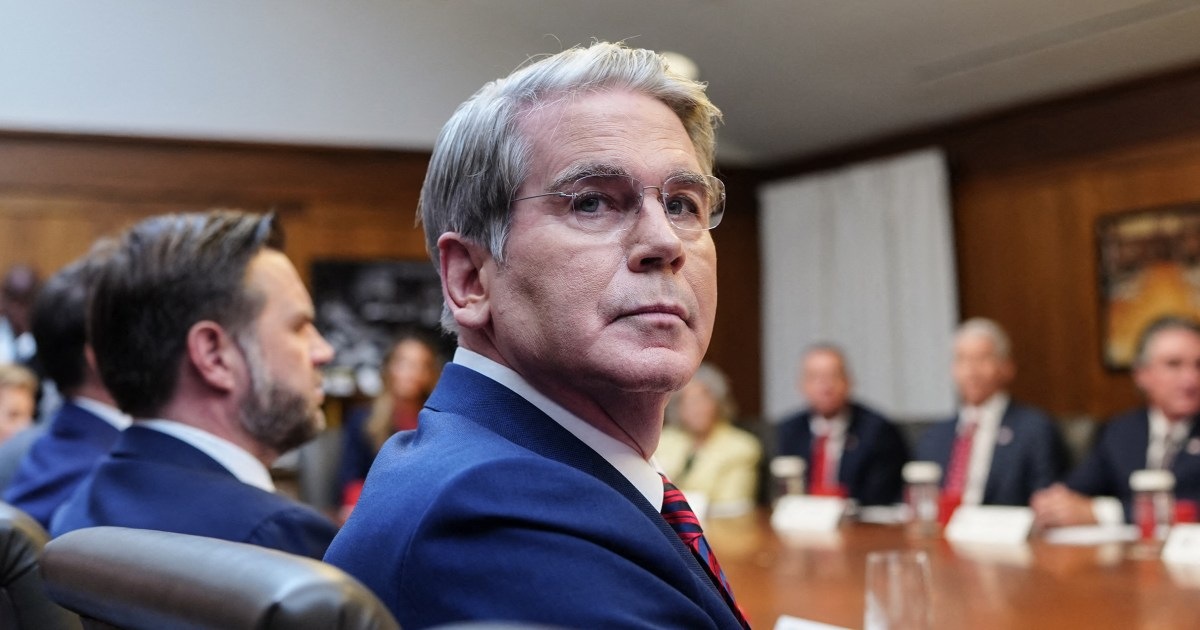
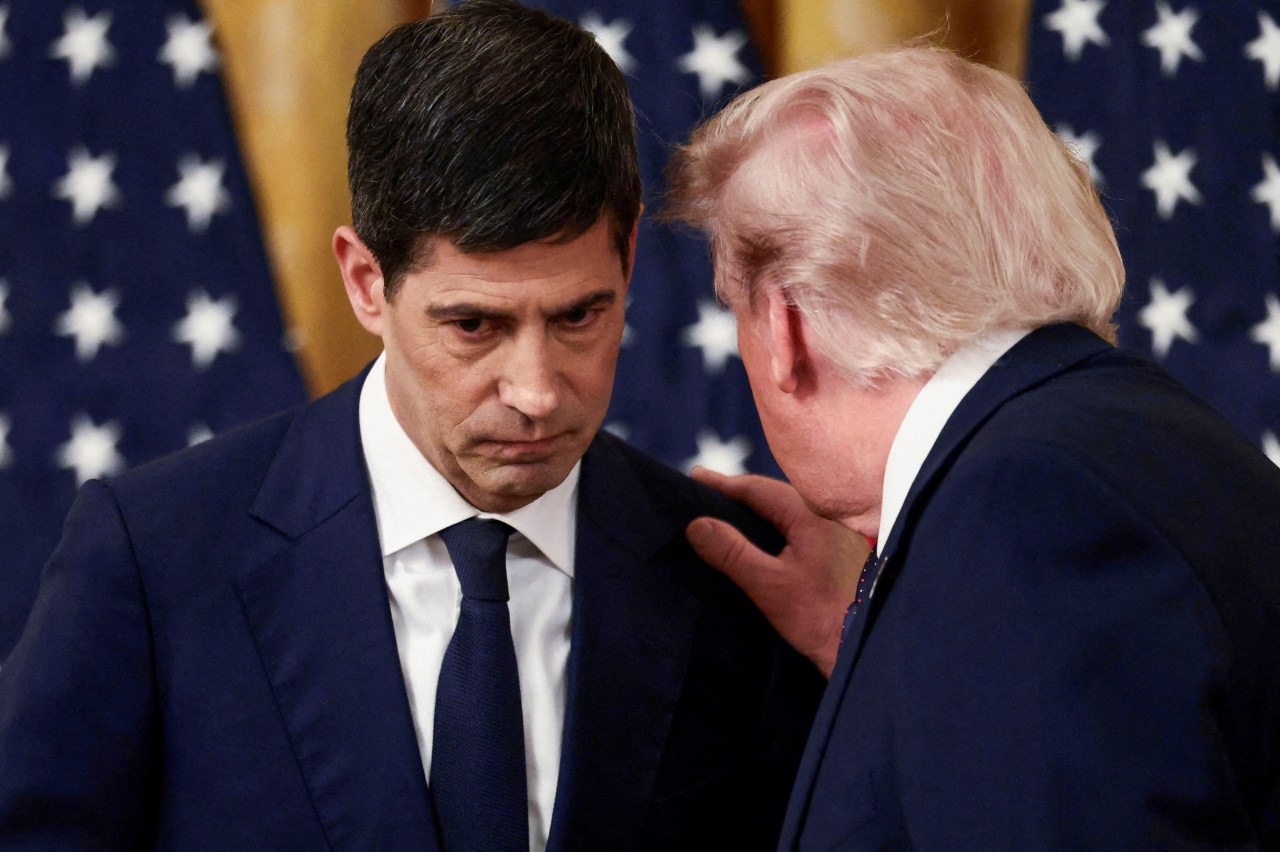
Setting the price of money is normally the Federal Reserve's job. Kevin Warsh was sworn in as its chair on 22 May 2026.7 On Wednesday the Treasury went into the bond market itself, and the market handed the price straight back.
Photographs
- Treasury Secretary Scott Bessent speaks to reporters at the White House, 20 August 2026 — Kevin Lamarque / Reuters
- Bessent outside the West Wing, 20 August 2026 — Alex Wong / Getty Images
- President Trump with Federal Reserve Chair Kevin Warsh at his swearing-in, the White House, 22 May 2026 — Evelyn Hockstein / Reuters
- Bessent at a Cabinet meeting at Camp David, 31 July 2026 — Aaron Schwartz / AFP via Getty Images
Citations
- Treasury doubles debt buybacks as Bessent moves to steady bond market, CNBC, 19 Aug 2026
- Bond yields fall after Treasury announces surprise move to ease rising rates, NBC News, 19 Aug 2026
- Trading Economics; AP via PBS NewsHour, 21 Aug 2026
- Treasury bond buybacks ease long-term yields, but analysts see limited relief, CNBC, 20 Aug 2026
- What the Treasury’s Buyback Surprise Says About the Bond Market, Council on Foreign Relations, 20 Aug 2026
- Peter G. Peterson Foundation, federal interest cost data through July 2026; Congressional Budget Office projections
- Council on Foreign Relations, 20 Aug 2026