A Chinese Robot Just Ran The 100m Faster Than Usain Bolt Ever Did
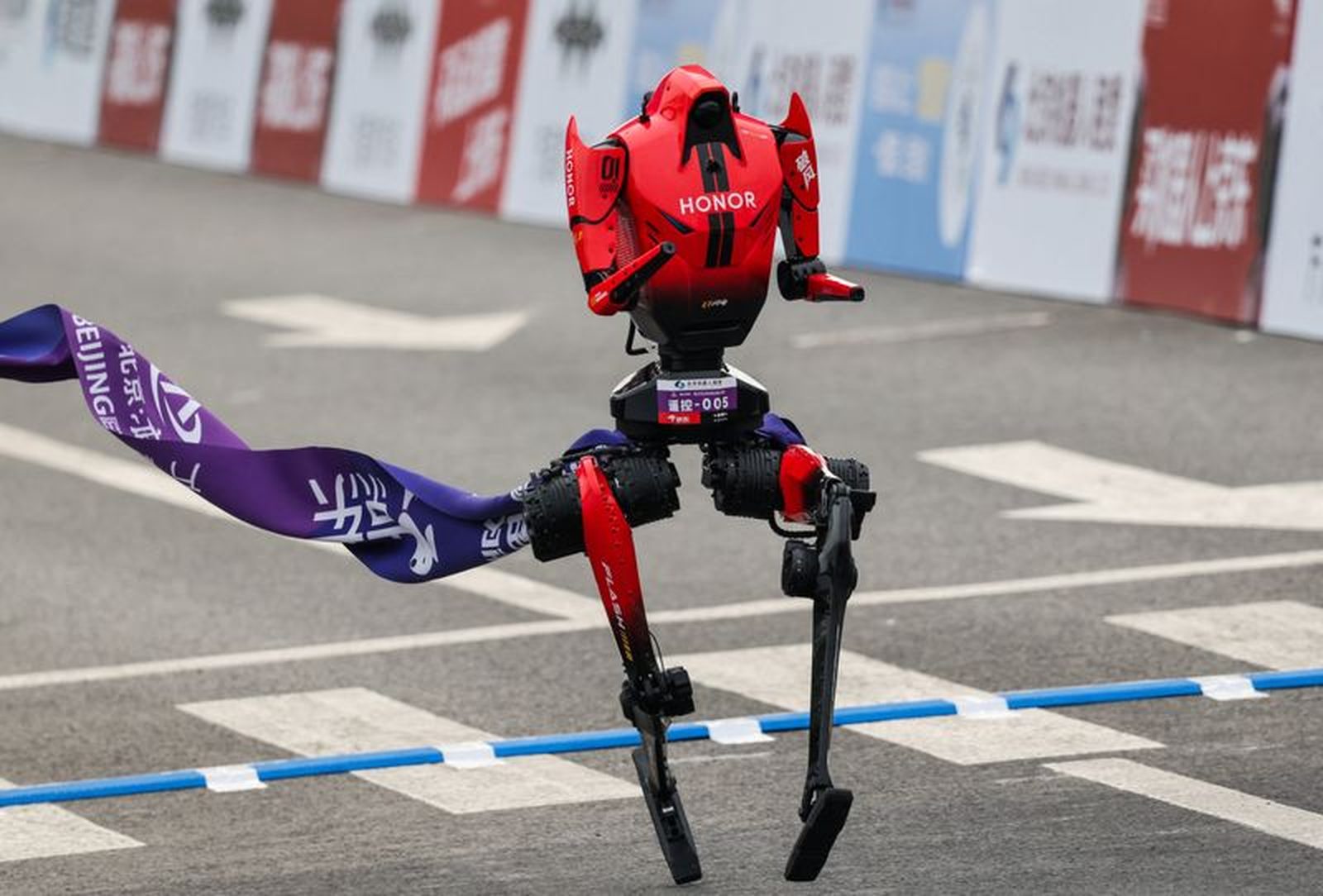
On Friday a humanoid robot built by the Chinese phone maker Honor was timed at 9.32 seconds over 100 metres in Beijing.1 2 Usain Bolt's world record, set in Berlin in 2009, is 9.58.1 The robot is called Lightning. It stands 169cm, about 5 foot 6, and its legs were lengthened by 10 centimetres to 1.05 metres for the attempt.1
The run was a preparatory test held before the second World Humanoid Robot Games, which opened the same day, rather than an event at the Games themselves.1 World Athletics had no involvement, and no record was broken in any official sense.
The number that got left out
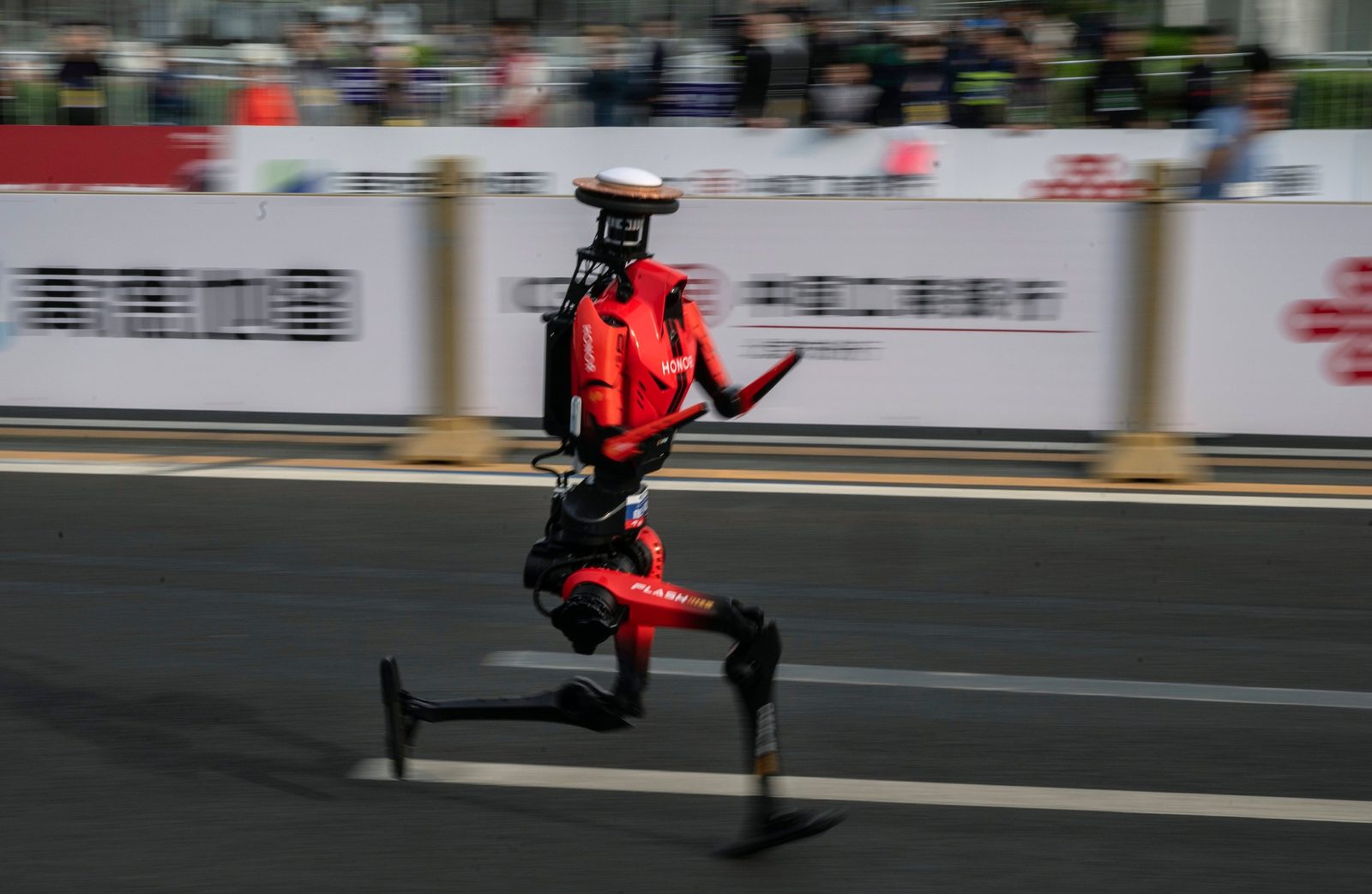
Lightning's peak speed was reported at 14.5 metres per second, about 32 miles an hour.1 2 A peer-reviewed analysis of Bolt's Berlin run puts his maximum at 12.33 metres per second, roughly 27.6 miles an hour, reached at about the 52-metre mark.3 So the robot is faster on the clock and faster at its peak. That is worth stating plainly, because most of the coverage compared only the finishing times.
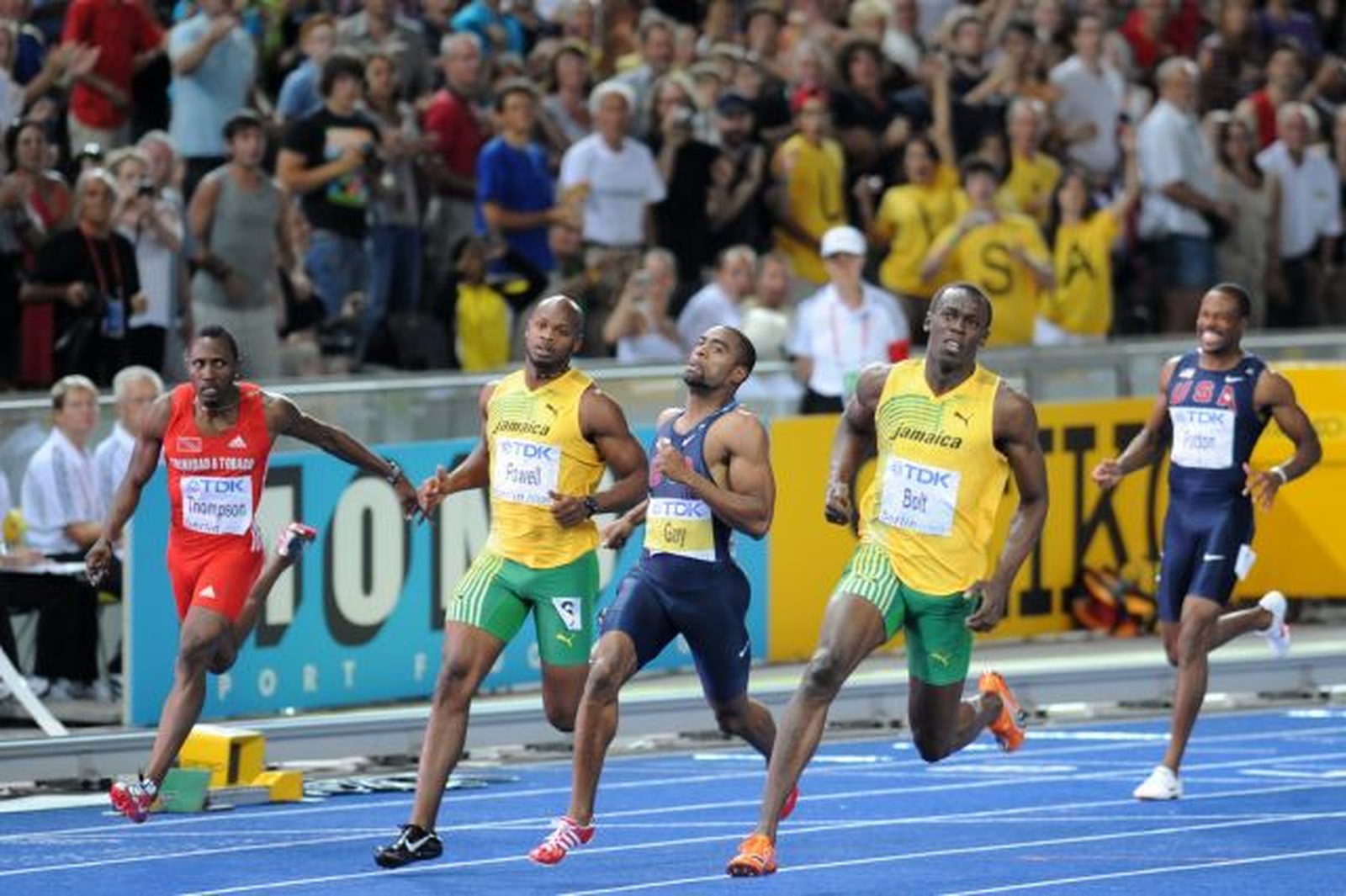
What the comparison leaves out is the conditions. Bolt ran from blocks, against seven other men, on a track he had never rehearsed. Lightning ran alone, on a course mapped in advance, with a support crew tracking it.4
A different robot, two days earlier
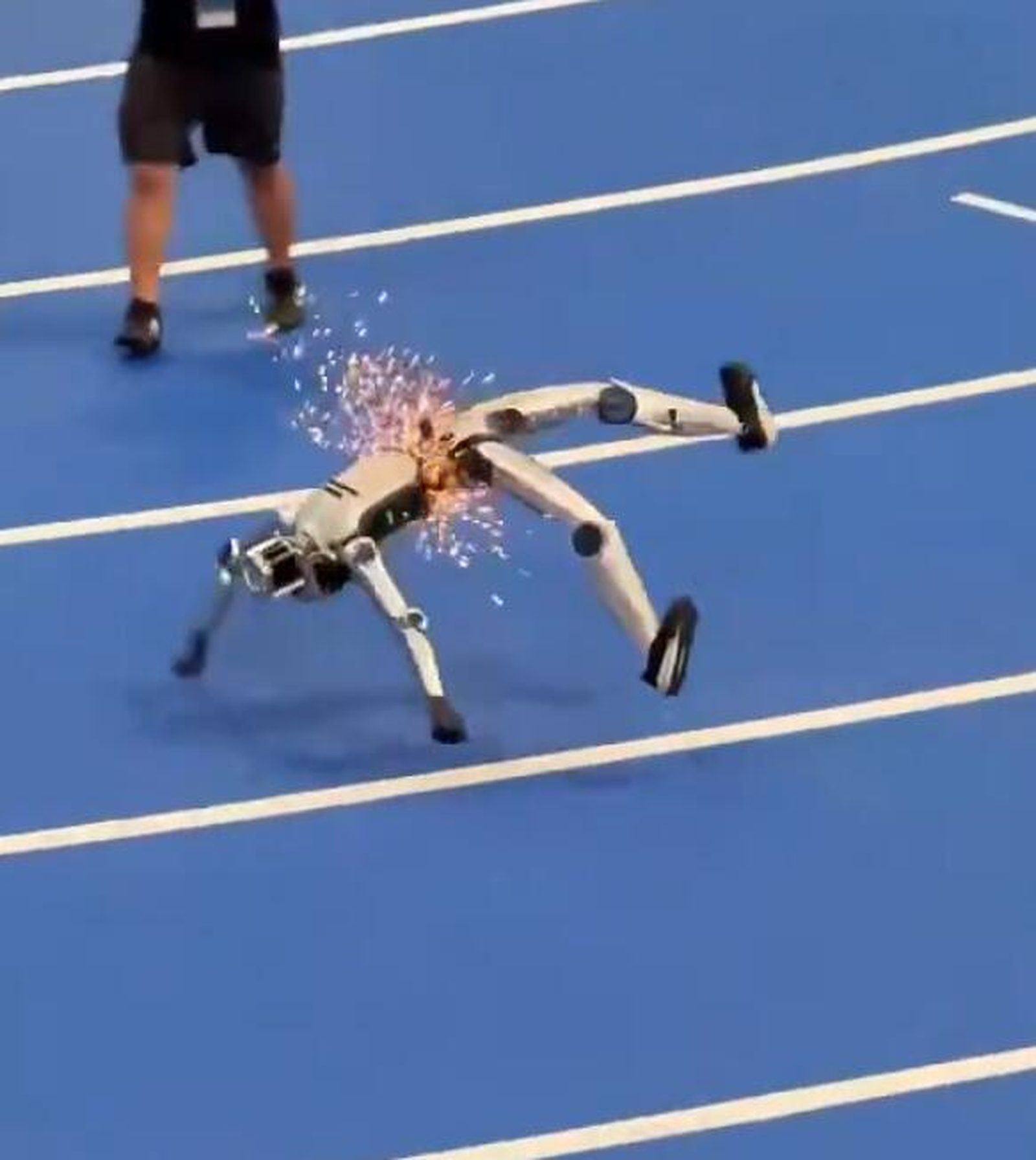
On or about 20 August, a different humanoid robot training for the same 100m event lost control and hit a padded wall at full speed, throwing sparks.5 Several outlets carried the footage. None identified its make or model, so it should not be attributed to Honor or to Lightning.
That is closer to the state of the art than the record is. When robots ran the Beijing E-Town half marathon in 2025, 21 started and six finished.6 The 2026 race was a step change: 112 teams from 26 brands fielded more than 300 robots, and Lightning won the autonomous category in 50 minutes and 26 seconds.6 It still collided with a barricade near the finish line and fell.6
What a roboticist makes of it

Rodney Brooks co-founded iRobot and is an emeritus professor at MIT. Asked about Lightning's marathon record in April, he said: “It's just a stupid publicity stunt,” comparing it to the days when horses were raced against cars.4 His objection is not that the machine is unimpressive but that it demonstrates nothing usable: “There is nothing useful that you could use in any application because it shows no safety at all,” and “there's no ability to interact with the world because it's all premapped.”4
Alan Fern, of Oregon State, put it more evenly. The robots do meet the definition of autonomy for that particular task, he said, in the way early lane-following did in cars. A scientifically meaningful test would send them through a brand new location, crowds and tight spaces, which the Beijing event did not attempt.4
One more thing worth knowing. Honor has published Lightning's height and its effective leg length. It has not published the robot's weight, its battery, its compute or a top-speed specification of its own.7 We are being invited to compare an athlete against a machine whose maker will not say what it weighs.
The Games run through 26 August.
Photographs
- Lightning crosses a finish line in Beijing, 2026 · Reuters
- Lightning competing in the Beijing E-Town half marathon, April 2026 · Kevin Frayer / Getty Images
- An unidentified humanoid robot crashes during 100m sprint training, Beijing, August 2026 · Jam Press
- Rodney Brooks, 2021 · Christopher Michel / Wikimedia Commons
- The 100m final, Berlin, 16 August 2009 · Erik van Leeuwen / Wikimedia Commons
Citations
- Usain Bolt's 100m record broken at World Humanoid Robot Games, Al Jazeera, 22 Aug 2026
- Chinese robot beats Usain Bolt's 100m world record in test run, Reuters via Cyprus Mail, 22 Aug 2026
- Multicomponent Velocity Measurement for Linear Sprinting: Usain Bolt's 100 m World-Record Analysis, Bioengineering, 2023
- A Humanoid Robot Beat the Human Half-Marathon Record at a Beijing Race, but What Did It Actually Prove?, Scientific American
- Robot filmed colliding with wall during 100m training, New York Post via Yahoo Tech, Aug 2026
- Humanoid robot half marathon, Beijing, The Next Web, Apr 2026
- Honor Lightning, Humanoid Press database