Ships Crossing The Strait Of Hormuz Defy Washington's Blockade Ten Times More Than They Defy Iran
There is a war in the Strait of Hormuz, and the price of it is already in your tank. Five months in, the clearest read on who is winning it does not come from either government's statements. It comes from the ships.
The setup is simple. Since the war began on 28 February 2026, the US Navy has blockaded Iran, and it wants every tanker and cargo ship crossing the strait to run the southern lane, out near Oman and away from Iranian ports. Iran wants the opposite: ships hugging its own northern coast, under its guns. The strait narrows to about 39 kilometres, 21 nautical miles, at its tightest, so there is no third lane where a captain quietly avoids the choice.
Here is what the ships chose. The maritime-intelligence firm Kpler tracked every crossing from 1 to 19 August and gave the counts to Al Jazeera. Of 112 oil and gas tankers, 21 openly ran Iran's route. Two took the one Washington demands. Read that gap slow: with a US war fleet in the water, the ships that showed themselves defied the blockade more than ten times as often as they defied Iran.
That is the finding under the headline. The mariners who committed to a side in the open, by their own tracked movements, treated Iran's threat as the one to obey and America's as the one to run.
But most ships committed to neither side in the open. They went dark. Over the same nineteen days, 89 of those 112 oil and gas carriers, more than 79 percent, switched off the transponders that broadcast their position and vanished from the tracking. Among all cargo ships it was 148 of 236, more than 62 percent. A ship that goes dark is not lost. It is hiding, on purpose, from someone.
"Some Gulf countries have sent shipments out by turning off tracking and doing ship-to-ship transfers," the energy researcher Marc Ayoub told Al Jazeera, describing governments, not smugglers, routing oil around the strait's watchers.
The choice is not abstract, because both threats have already killed. On 8 August an Iranian missile struck a tanker belonging to ADNOC, Abu Dhabi's national oil company; across the company's vessels hit since the war began, one crew member has been killed and twenty injured. Three days later, on 11 August, a US Navy helicopter fired two Hellfire missiles into the engine room of the container ship Vela Nova, the twelfth vessel the United States has disabled for defying its own blockade. The Vela Nova was a 475-foot, Panama-flagged carrier; its seventeen crew were accounted for.
Before the war, the strait carried about a fifth of the world's traded oil and gas, roughly 130 ships a day. The tracked window shows a small fraction of that still moving, in the open or in the dark. The market has noticed. Brent crude, around $66 a barrel before the fighting, sits at $92.90 now, after spiking near $119 in March.
The ships are not issuing statements. They are voting with their transponders, and that vote is the most honest war report the strait has produced.
By the numbers
- 21 to 2 — Of 112 oil and gas tankers tracked crossing the strait from 1 to 19 August, 21 openly ran Iran's demanded route; 2 took the US-demanded route past Oman.[1]
- 89 of 112 — Oil and gas carriers that switched off their transponders and went dark over the same nineteen days — more than 79 percent.[2]
- 148 of 236 — Cargo ships that went dark crossing the strait, 1 to 19 August — more than 62 percent.[3]
- 8 Aug — An Iranian missile struck an ADNOC tanker; one crew member killed and twenty injured across the company's vessels hit since the war began.[4]
- 11 Aug — A US Navy helicopter fired two Hellfire missiles into the container ship Vela Nova — the 12th vessel the US has disabled since its blockade began.[5]
- $66 → $92.90 — Brent crude, before the war versus now — after peaking near $119 a barrel in March.[6]
The reporting
This story is built on reporting by Al Jazeera English. Read the original →
Sources
- Al Jazeera English — Are Hormuz ships more willing to defy Iran or the US? What the data shows
- Al Jazeera English — UAE says Iran targeted ADNOC tanker in Strait of Hormuz
- Stars and Stripes — CENTCOM disables cargo vessel transiting the Gulf of Oman
- Al Jazeera English — US military fires on cargo vessel it said sought to break Iran blockade
- The National — UAE and Qatar condemn Iranian strike on ADNOC oil tanker
- USNI News — Strait of Hormuz traffic down as US blockade appears to deter some ships
Image credits
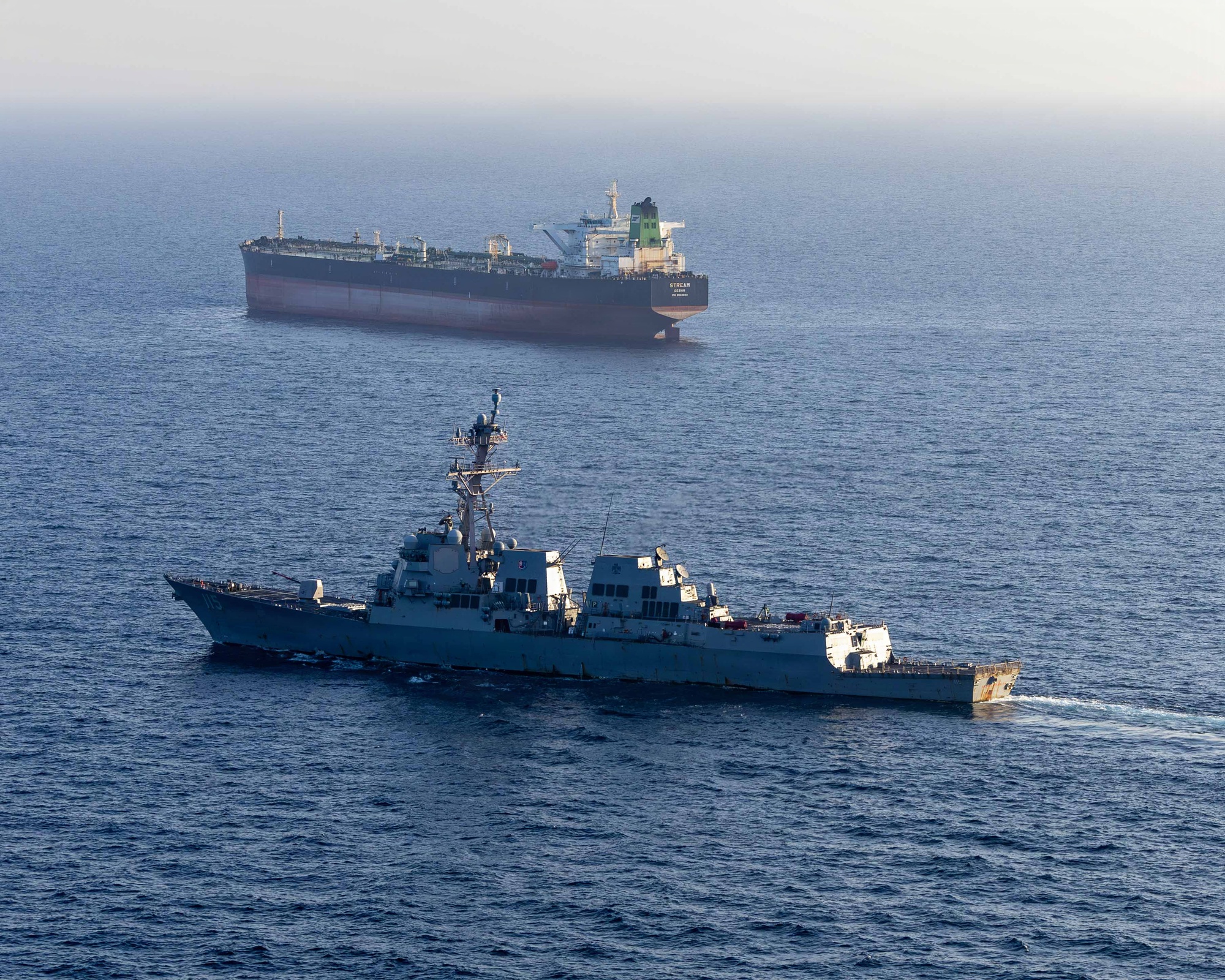
- Cover — USS Rafael Peralta shadows the tanker Stream, Arabian Sea, 26 April 2026: source (Public domain (DVIDS / US Navy · CENTCOM)) — NAVCENT Public Affairs / U.S. Central Command Public Affairs
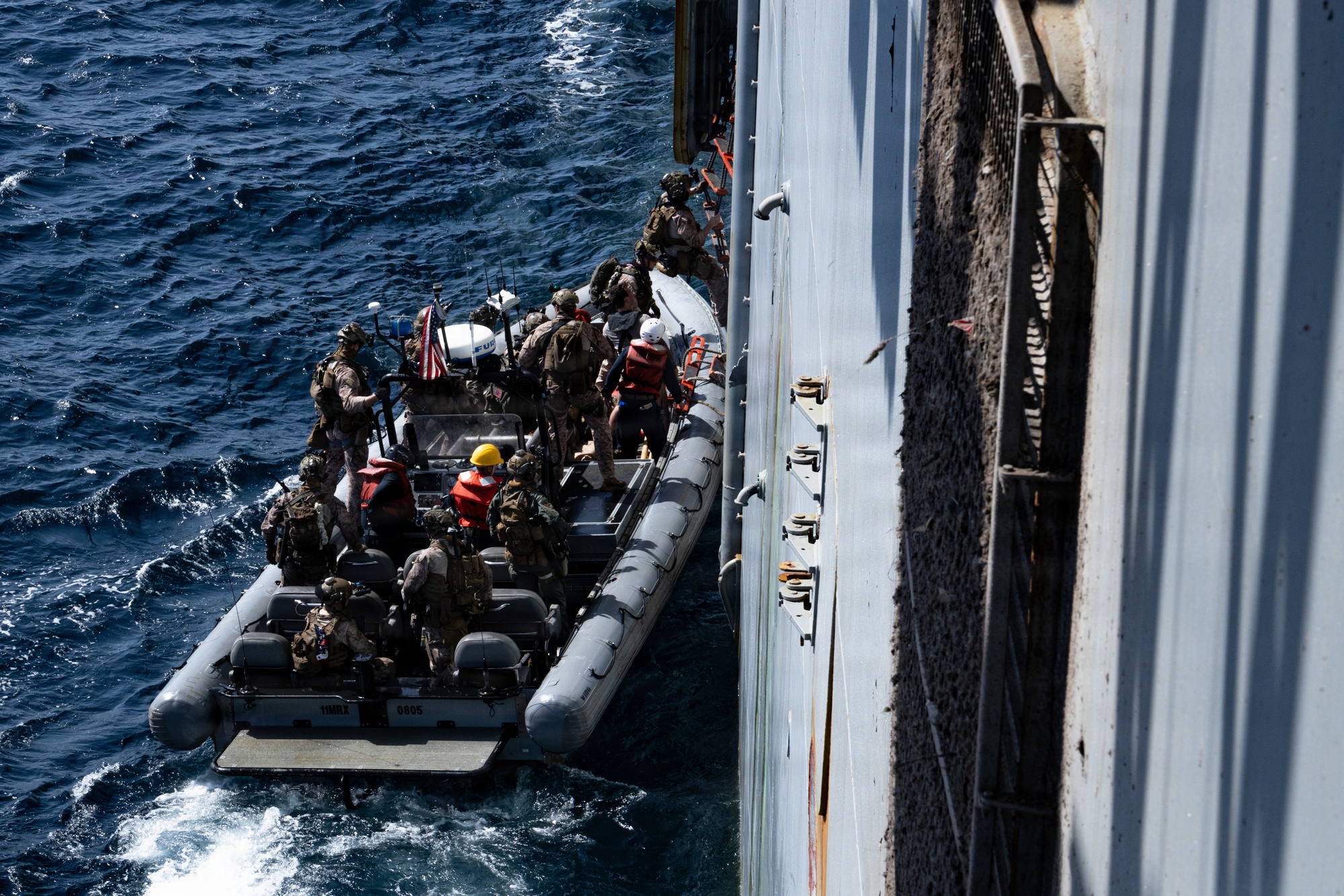
- US Marines board the merchant ship Blue Star III, Arabian Sea, 28 April 2026: source (Public domain (DVIDS / US Central Command)) — U.S. Central Command Public Affairs
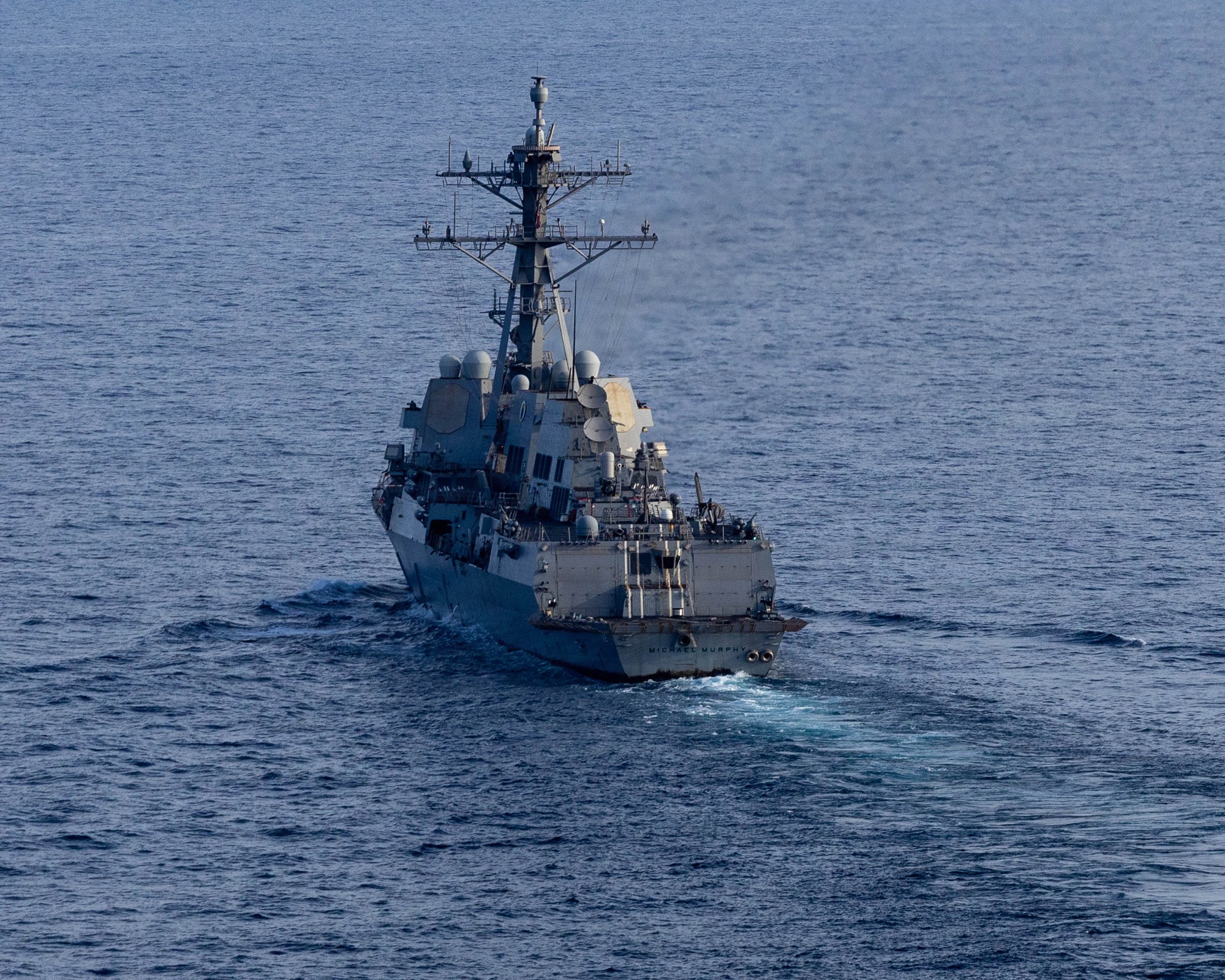
- USS Michael Murphy patrols the Arabian Sea enforcing the blockade, 17 April 2026: source (Public domain (DVIDS / US Navy · CENTCOM)) — NAVCENT Public Affairs / U.S. Central Command Public Affairs